
When homeowners think about installing a French drain, they usually focus on where the water is collecting. Maybe it’s a soggy backyard, a flooded flower bed, or standing water near the foundation. But there’s another question that’s just as important: Once the French drain collects that water, where does it go?
The answer can make the difference between a drainage system that solves your problem and one that simply moves it somewhere else.
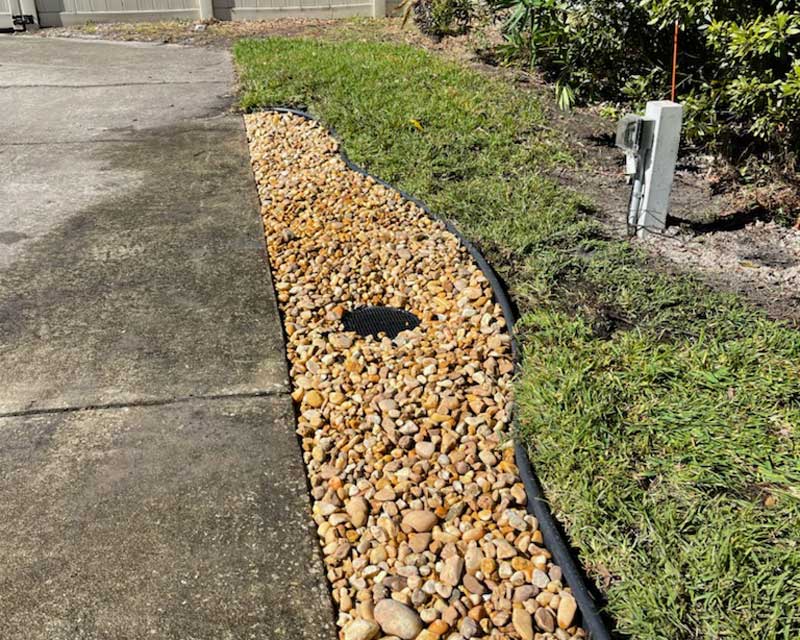
How Does Water Exit a French Drain?
A French drain collects excess groundwater through a gravel-filled trench containing a perforated pipe. From there, water typically travels through a solid discharge pipe toward a designated outlet.
That outlet needs to be carefully selected. Ideally, it allows water to flow away from vulnerable areas without creating flooding, erosion, or drainage problems elsewhere on your property.
There are several ways to accomplish this, depending on your yard’s elevation, soil conditions, and available space.
Common French Drain Discharge Options
Daylight Outlets
A daylight outlet is one of the simplest solutions. The drainpipe extends to a lower point on the property, where water flows out naturally through an exposed opening.
This approach works well when the yard has sufficient downhill slope. However, the outlet must remain clear of leaves, dirt, and other debris, and the discharge area may need protection against erosion.
Pop-Up Drainage Emitters
Pop-up emitters are commonly installed in lawns. These devices sit nearly flush with the ground and open when water pressure builds inside the discharge pipe.
They offer a discreet alternative to exposed pipe openings, but placement matters. An emitter that releases water into a low spot can create another puddle instead of eliminating the original problem.
Designated Drainage Areas
Sometimes, the best destination is a portion of the yard designed to handle additional water. Depending on the property’s conditions, this might include:
- A properly graded drainage swale
- A rain garden or landscaped infiltration area
- A dry well where soil conditions and groundwater levels permit
- An approved stormwater drainage connection or outfall
Each option has limitations. For example, a dry well may perform poorly where the groundwater table is already high, while connections to public drainage infrastructure may require authorization.
Why French Drain Outlet Placement Matters in Jacksonville
Northeast Florida’s heavy rainfall, relatively flat terrain, and sometimes-high groundwater levels can complicate drainage planning.
Simply directing water toward the property line isn’t necessarily a solution. It could flood a neighbor’s yard, damage landscaping, or create erosion. Likewise, discharging near a sidewalk, driveway, or building foundation can introduce new problems.
A properly planned French drain installation considers the entire route water will travel, from the collection trench to its final discharge location. That includes evaluating elevation, anticipated water volume, soil drainage capacity, and applicable local drainage requirements.
Get Your French Drain Installation Done Right
At Daniels Landscape & Irrigation LLC, we understand that effective drainage requires more than burying a pipe. Serving Jacksonville, Ponte Vedra Beach, St. Augustine, Orange Park, and surrounding communities since 1992, we specialize in French drain installation designed around your property’s specific needs.
Dealing with standing water or persistent drainage problems? Contact Daniels Landscape & Irrigation LLC to discuss your French drain options and find a practical solution for your yard.